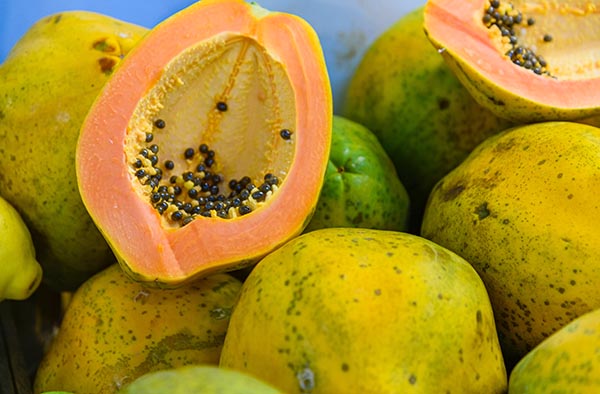
Papaya is an orange-colored tropical fruit with sweet flesh. It is also called papaw or pawpaw and it is native to Mexico and Central America. It is a sweet and tasty fruit loaded with plenty of nutrients. Eating papaya gives many health benefits especially for anyone with a sensitive stomach, irritable bowel syndrome, poor digestion or constipation.
1. Papaya helps relieve constipation
Constipation occurs when stools become hard and difficult to pass. Constipation can happen for many reasons, such as eating unhealthy foods, drinking not enough water, and lack of physical activity. If the food moves slowly through the digestive tract, the colon will absorb more water and the feces will become harder.
Papaya fruit is a good source of dietary fiber that helps prevent constipation. The fiber absorbs water in the digestive tract and becomes soft and bulky. This gives the stools smooth consistency and makes it easy to pass.
2. Papaya is good for gut health
Eating papaya helps with indigestion and heartburn. The reason papaya is good for gut health is mainly due to the enzyme papain that helps with the digestion of proteins. Papain is often sold as a supplement for digestion to help with bloating and heartburn.
Papain is a proteolytic enzyme extracted from the raw fruit of the papaya plant. Proteolytic enzymes help break proteins down into smaller fragments called amino acids. This is why papain is a popular ingredient in meat tenderizer.
You can get papain from eating raw papaya fruit.
3. Papaya gives you smooth, shiny, and younger-looking skin
Papaya is loaded with vitamin C and beta carotene. Vitamin C is necessary to produce collagen fibers which are a main structural component in the skin. Vitamin C is a potent antioxidant that helps reduce tissue-damaging molecules called free radicals.
Free radicals are active molecules produced during metabolism. They damage healthy tissue in various parts of the body including the skin. Free radicals are the main cause of skin wrinkling and aging.
Some studies have shown that vitamin C may help prevent skin damage by ultraviolet (UV) radiation from the Sun. These UV rays cause skin cancer.
Papaya contains large amounts of beta carotene which is converted to vitamin A in the body. Beta carotene in raw red-fleshed papayas is easy to absorb by the digestive system compared to raw tomatoes and raw carrots.
Beta carotene is an antioxidant that protects the skin. Papaya creams are available on the market to help with various skin conditions.
4. Papaya gives you essential nutrients
Papaya has plenty of minerals like phosphorus, iron, potassium, copper, manganese, calcium, and magnesium.
Minerals help your body grow, develop, and stay healthy. The body uses minerals to perform many different functions such as heart-pumping, building strong bones to transmitting nerve impulses.
5. Papaya lowers cholesterol
Cholesterol is a fatty substance that is carried around the body in the blood. The body produces most of the cholesterol naturally. It is also is found in some foods such as meat, eggs, and milk.
Although some cholesterol is needed for your body to function, too much cholesterol can lead to health problems. The extra cholesterol builds up in the walls of the arteries, forming plaques that can block your arteries, making it harder for blood to flow through.
Dietary fiber in papaya and other fruits helps lower the cholesterol levels in the body.
6. Papaya boosts your immunity
The immune system defends the body from infection and other harmful substances. It is made up of a complex network of cells, tissues, and organs in your body. A Weaker immune system leads to frequent infections in the body.
Vitamins and minerals are essential for the immune system function. Adding papaya in your diet will give you plenty of nutrients that can boost your immunity.
7. Papaya reduces inflammation in the body
Inflammation is an important function of the immune system’s response to injury and infection. It is the body’s way of signaling the immune system to heal and repair damaged tissue, as well as defend itself against harmful pathogens, such as viruses and bacteria.
However, if the inflammatory process goes on for too long or if the inflammatory response occurs in places where it is not needed, it can cause various problems in the body.
Chronic inflammation has been linked to certain diseases such as heart disease. It can also lead to autoimmune disorders, such as rheumatoid arthritis, lupus, and inflammatory bowel diseases.
The antioxidants and vitamins in papaya help reduce chronic inflammation in the body.
Summary
Papaya is a sweet, tasty fruit that gives you many health benefits such as preventing constipation, maintaining healthy skin, and boosting your immunity. Select fresh papayas with reddish-orange skin that are soft to the touch. You can cut them into halves, scoop out the seeds, and enjoy the sweet flesh.